Vintage CD player buyers guide: An updated 2026 revision
In October 2025 I published an article Vintage CD player buyers guide, which turned out to be quite popular, but I was not finished. I kept on acquiring, disassembling, servicing and studying the players further and discovered I need to come up with an update. Once again, this is all BS free, based on hands-on experience and objective research.
Let's drill into the vintage players and my findings brand by brand. My original conclusions of the previous buyers guide edition were not outright wrong, but some new learnings made this updated revision a necessity.
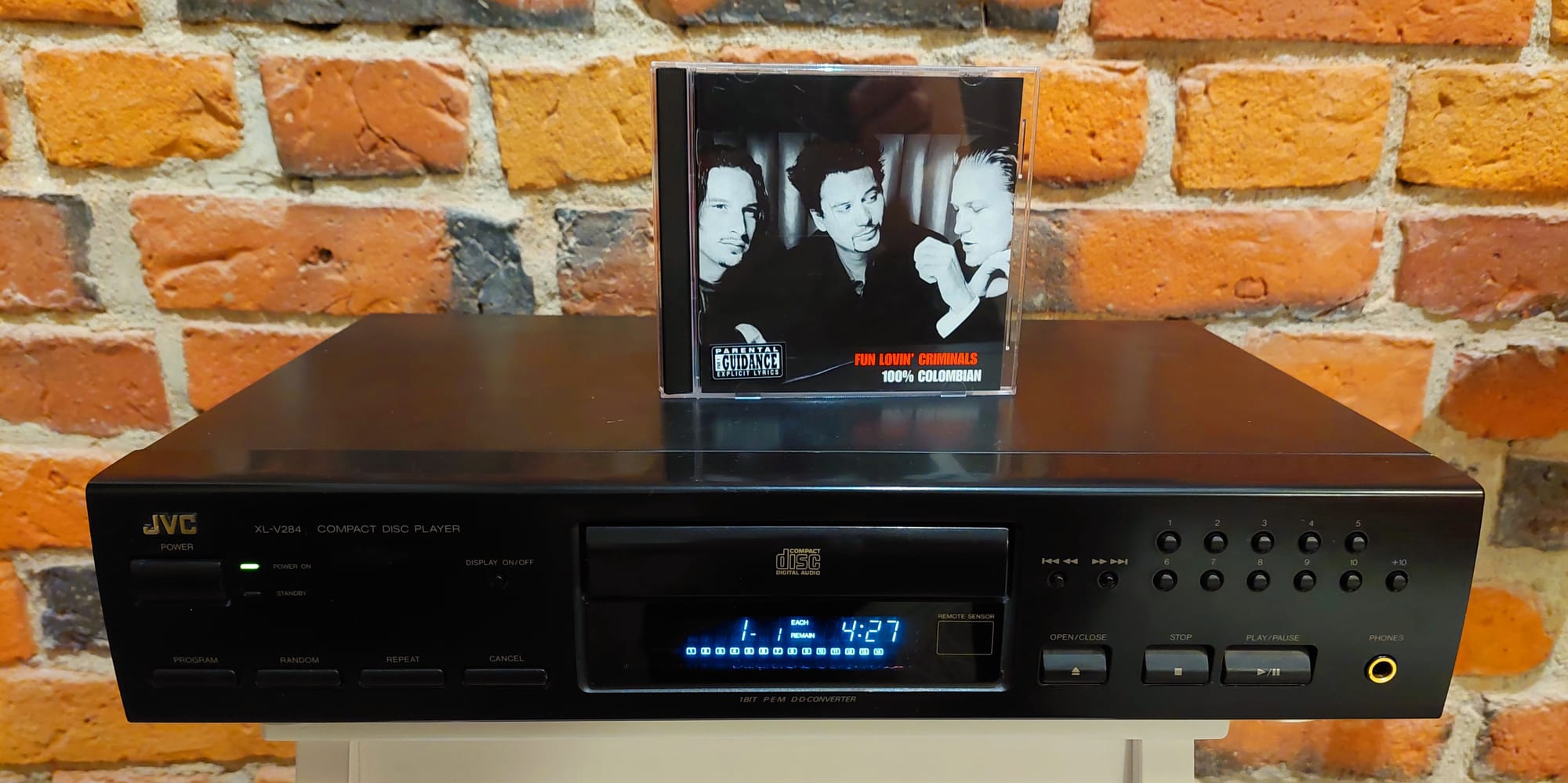
JVC XL-series: The best bet
After going through a handful more of JVC XL-Z and XL-V series players I learned to appreciate their quality even more. The proprietary JVC OPTIMA laser mechanics are an engineering masterpiece and generally very reliable even today, decades after. They are also sensitive enough to read CD-R discs, which have lower reflectivity, even in models that were released years before the technology became popular. The OPTIMA's are also easily serviceable - clean the lens with a Q-tip and isopropanol alcohol, and lubricate the rails, gears, and the tray sliders. Spare parts may be an issue though.
As discussed in the previous edition, the JVC 1-bit DACs are sonically accurate and measure clean. The tad cheaper XL-V series often have DACs from the parent Matshushita group (Technics, Panasonic), while the more premium XL-Z use JVC's proprietary JCE chips that fare even better. Both offer excellent measurable performance as well as a pleasing audible experience. My favorite daily driver is the fantastic JVC-XL-Z331 (technically identical to Z335).
So if you are on the market for a vintage player, start with JVC XL series from the 90's. You may want to pick a model with digital audio output for future proofing.
Technics SL-PG-series: Workhorses
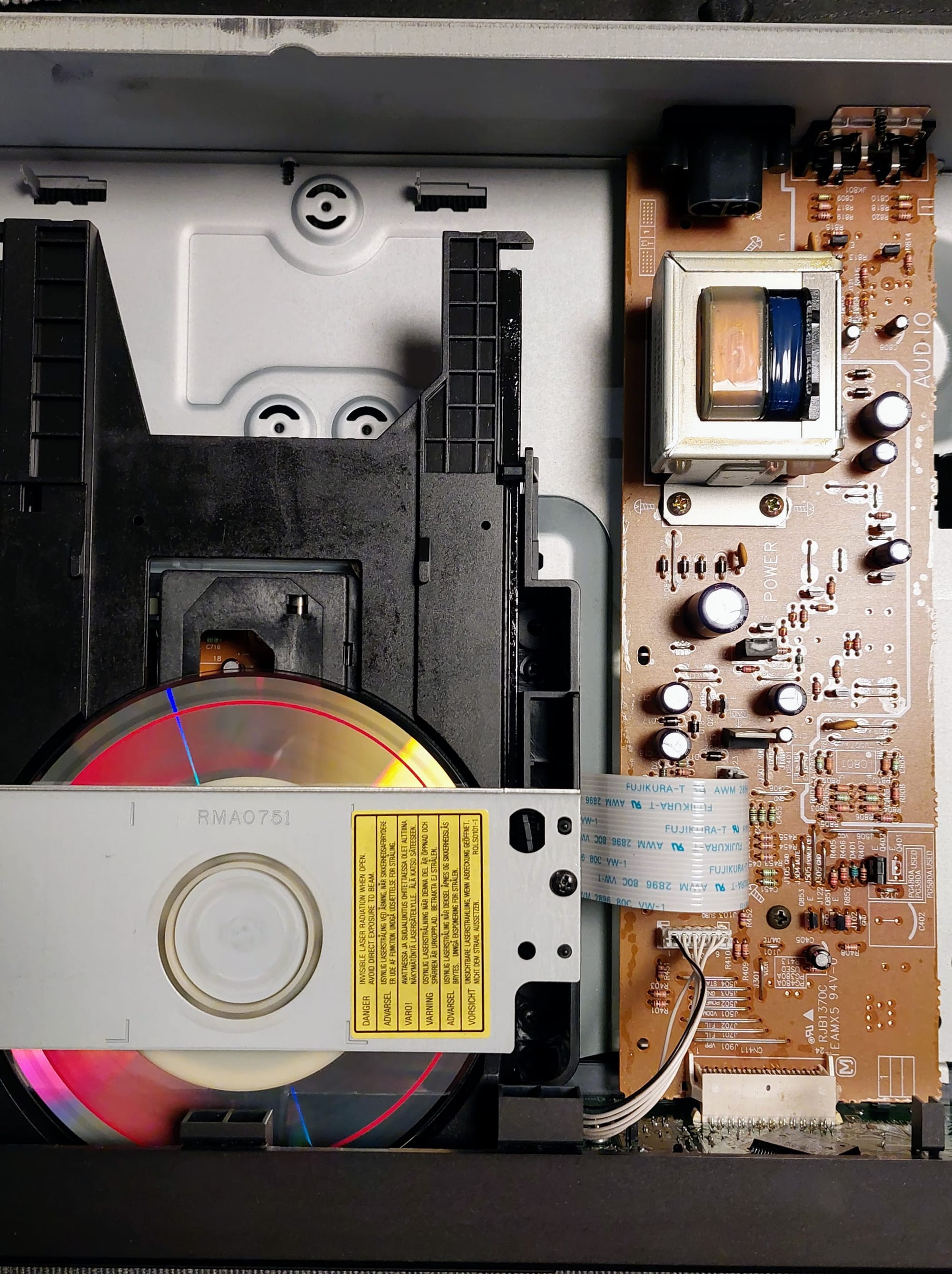
Technics was my favorite in the last edition, but now sidelined by JVC. The difference is in the laser pickups, as Technics uses different variants of Philips CDM models. While Philips' lasers and mechs are one of the better ones, their performance varies from revision to another, at least in the Technics implementation – only some of the models are able to playback CD-R discs. I realize that burning your own CDs is a very narrow niche case in the 2020's, but it may tell something about the accuracy and sensitivity of the laser pickup. I don't know this for a fact, but ability to read CD-Rs should also be an indicator on the overall performance of the transport, including the error correction circuitry. Home made CD-Rs have lower reflectivity, higher jitter, higher error rate and different pit geometry. If the player can handle that it should be a good sign, even if you only play pressed discs. While the Philips CDM 12 -series mechanism is generally Ok, the JVC OPTIMA will outlast them. Spare part availability is better for the Philips, though.
Technics' 1-bit MASH DACs sound great and measure good. The graphite gray Technics signature design screams cheap or utilitary, but chassis are solid. The electronic design is typically very simple. For some reason the aftermarket value and demand of the Technics is very good on my local market. I've been selling the units I no longer need and all Technics players always go fast, even with a premium asking price. These can be easily flipped for some pocket money profit.
Pioneer PD-series: Nice, but handle with care.
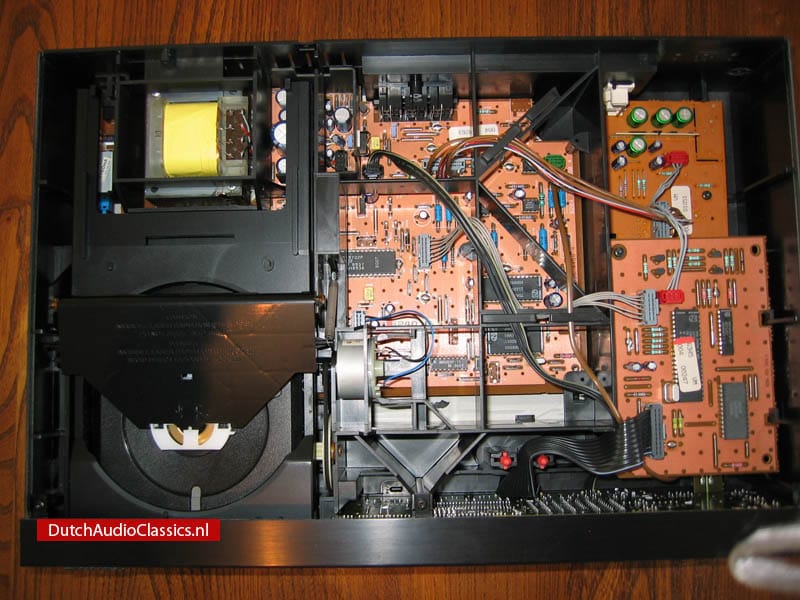
In general I like how the Pioneer players work and sound, but there is a problem. A big portion of their 90's lineup suffers from the notorious lens gluing issue. Over the decades the glue hardens and the lens falls off. This often happens during postage or transit. If you are buying one online, make sure your shipping is insured. The lens can be glued back on with a water based glue (do not use superglues as they may fog the lens!), but that is still major risk.
In good working condition, the Pioneers operate very nicely and usually support CD-R discs. The mechanics are not as well designed or robust as JVC OPTIMA, but still seem to hold on pretty well even today. Spare parts are harder to find. The higher end PD-S models feature a unique upside-down Stable Platter transport, which is said to be excellent, but suffers from the same lens glue issue. I am yet to find a unit for myself to test.
On the DAC side the Pioneer differs from Technics and JVC significantly, as they mostly relied on multi-bit Burr-Brown chips. While the differences are subtle, some may find the sound signature to be slightly "warmer". Pioneers are appreciated on the aftermarket for this reason. The mentioned PD-S models feature a 1-bit DAC with Legato Link, which are highly regarded, but as said I am still looking for a reasonably priced unit. They are rare on my local market.
It is also worth noting that later Pioneer models switched to Sony's 1-bit DACs, such as the PD-103, PD-207 and their siblings. They still use Pioneer's own laser mechanism and have the same glue issue.
YouTube channel Spare Time Repair demonstrates the lens glue problem and how to fix it. This issue impacts all Pioneers with PEA transport. I shipped out a PD-4500 and the lens popped out in transit. Luckily the recipient was able to glue it back in.
Philips: Aggressive at cost reduction
Philips was the pioneering brand of Compact Disc audio and in cooperation with Marantz they produced a number of legendary vintage classics that are pricey collector's items today.
Unfortunately Philips started a very aggressive cost reduction early on when entering the nineties, which resulted in cheaply made and flimsy plastics chassis constructions. Seriously, these look and feel like toys you find inside Kinder eggs.
But the basic fundamentals are solid, with their own CDM lasers are transport mechanics and in-house Philips TDA-series 16-bit DAC chips, which are appreciated by vintage enthusiasts. While I have stated before that all correctly implemented DACs will sound the same, my Philips CD 610 (TDA1543 DAC) made me think about the sound signature thing from a new perspective. I am not at all sure whether I could spot the difference in a proper blind test, but I have a feeling that this player may sound slightly different. It is very hard to describe in words, there certain liveliness in the sound - it sounds somehow "big" when playing rock titles with electric guitars. Like there would be a very slight reverb or something. The technical specs of the TDA's are nowhere near the JVC 1-bits or similar, so there may be a slight harmonic distortion or harshness in the sound that some may find sonically pleasing or energizing.
Yamaha: Avoid
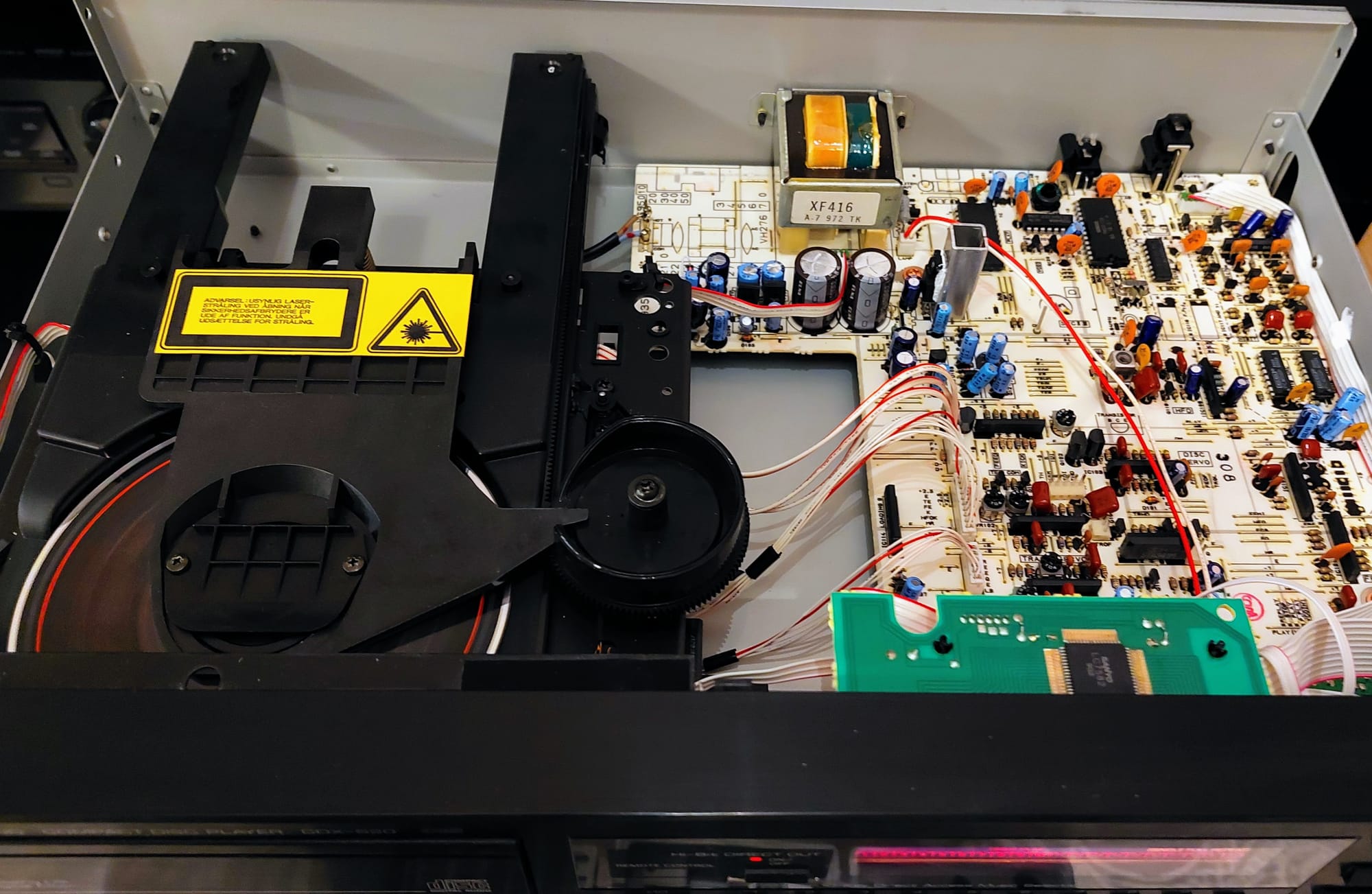
While the Japanese dominated the 90's player marker (JVC, Technics, Pioneer), I find nothing desirable in the Yamaha units I explored hands on. My units had a Toshiba TAOSH transport, which is overly complex and flimsy. While the lasers are durable, they suffer from spindle motor failures. They do not support CD-R's and are somewhat picky on scratched originals as well. Note that many Yamahas have also Sony KSS mechanics that should be better. DACs vary from early Burr-Browns (which I had), to Matsushitas and Yamaha's own chips. I currently own a CDX-520 unit, which has a Hi-Bit Direct button to bypass the analog audio low-pass filters - I found absolutely zero difference in the audio whether it is activated or not.
Overall, I found nothing the Yamaha's that would earn them any credit or strength against the rivals. Their aftermarket value varies, as the brand has some loyal fans, but not as popular demand as with Technics, Pioneer or JVC. Personally I will sell my unit and stay away from them in the future.
TEAC: Famed brand, but nothing special
My impression on TEAC is exclusively based on an single CD-P3450 unit I have. I am well aware that TEAC's VDRS transport is regarded possibly the best ever, but asking prices are also insane.
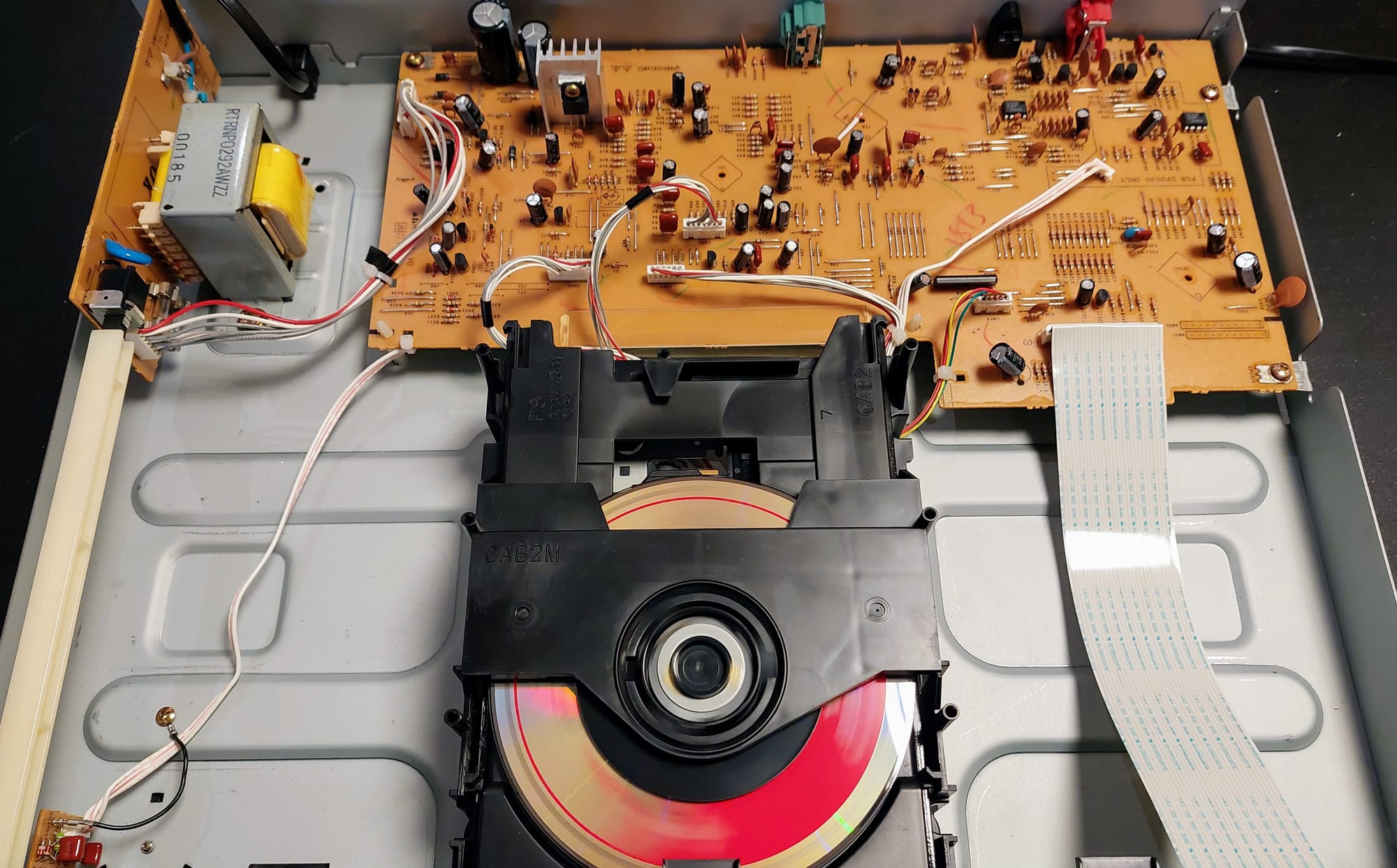
The CD-P3450 is a mid-priced unit, with parts scavenged from various sources. The bulky chassis is well made and engineering solid, but you'll need to remove the top circuit board just to clean the lens, which is dumb as otherwise the chassis is half empty. The Sanyo SF-91 mech has a good reputation (but I've only seen this one unit) and the player is built around an integrated Yamaha system on a chip YDC103.
The CD-P3450 is just a very basic player that is reasonably well built and operates nicely, but without any special vintage appeal. Interestingly, high-end brand Musical Fidelity sold slightly modified versions of these mid-range TEACs under their own label.
Sony
This updated revision of the buyers guide does not add much to Sony and it was covered in the previous edition. My opinion is unchanged for those and I still consider them as a solid choice, yet without any serious advantages over the best. Perfectly fine players though, if you get a unit in good working order.
The earlier Sony's, before the 1-bit era, had more variance in their internals. I recently scored a Sony CDP-390 for cheap that has a Philips TDA-1543. This player has very neat vintage look and the KSS-240 transport should be one of the better ones. I have only had it for couple of days, so it is too early to say whether it makes any difference sonically.
The question of sound signature...
Now this is a topic repeatedly discussed in the audio forums - do all DACs sound the same? In principle the digital to analog sound conversion should be a transparent process, which produces no significant alteration to the audio signal. Especially from the 90's and onwards, as the technology had matured and popularized. The implementations of the DACs vary, and there is also the analog amplification stage that come in different qualities. Cost reduction towards the turn of the millenium may have played a role, as manufacturers aggressively tried to save every dime - you'll see this if you look in the player units of different age.
The social media discussions often over emphasize the DAC circuitry. Technically speaking the implementation should be more significant factor than the chip itself. There is the operational amplifier analog stage before the output ports. Also at this age the capacitors may have aged and not operate in their specified ratings any more - this may have an impact on the sound. The bottom line is that a working and correctly implemented DAC circuitry should be transparent, meaning that it does not add an audible difference to the sound. This was technically achieved already in the 80's and the later 90's DACs generally measure way better than the human ear is able to hear.
But I also read an interesting theory, that in the early days of Compact Disc audio, the manufacturers' engineering reference may have been top quality vinyl record players, the champions of the previous technological generation. They may have wanted the players to sound like their analog rivals, rather than flat out neutral. Some brands may also have tuned the sound to their liking to create a brand identity - for example Marantz always likes to mention their Marantz sound, even today, but that is marketing. In general the hi-fi industry is full of snake oil.
To conclude this article, here is list of sound signatures you may or may not find in the vintage players. The psychological bias is very deceiving. When I switch players back and forth in my setup, I often initially think that "Now I heard the difference!", but when I switch back again it isn't there anymore. Also a very important factor is that the output voltage of CD players vary, despite the standard specification of 2 volts. For example the JVC XL-Z331 only pushes ~1,8 volts, which means means it plays at a slightly lower volume and therefore may sound dull initially, until the difference in compensated by increasing the volume from the amplifier.
- JVC: Clean, accurate, neutral, non-fatiguing. Best of the pack and most transparent - meaning closest to the original sound. Excels at anything.
- Technics: Closely related to JVC, being a part of the same Matsushita Corp. Subjectively speaking the Technics may be slightly more relaxed and forgiving, meaning less accurate. Always described as warm and pleasing by the press and on internet communities. Try Technics with classic rap/hip-hop.
- Pioneer w. Burr-Brown: Possibly slightly warmer and pleasing, with less emphasis on the treble. Might be more pleasing on records with lower quality mastering. Try Pioneer with rock and metal tunes - anything with electric guitars. For a reason unverified, I really like my Pioneer PD-4550 with Burr-Brown PCM1700P-L.
- Philips w. TDA1543/1541: Least accurate with the potential to add certain liveliness, energy and "big sound" to your records. Could be due to higher measured harmonic distortion levels? Heavily depending on the rest of your system, but might introduce some added life and energy to records with dull mastering. Like Pioneer, try Philips with anything that has electric guitars. Note that the TDA based Philips players, especially TDA1541, are very old but pricey. The CDM4 (and earlier) swing arm mechanisms are very reliable, but the capacitors are a major risk at the age of ~40 years. They are expensive to replace, unless you can do it yourself.
I repeat: I most certainly can't catch these differences when testing blind. In my non-professional test environment it is more of a gut feeling than anything else. There is something psychologically pleasing in fooling around with vintage gear and then "hearing" a difference. Luckily they are still cheap, but the prices are going up. No harm done by hunting a few different kind of players and testing yourself. After all, this is a hobby, hobbies rarely make logical sense and if it gives you pleasure then spending a couple of bucks on a players is not an issue. You can always sell it later and even make some profit. It is fun to hunt down players from online marketplaces and flea markets, trying to find something priced lower than market value.
Final words
I hope you find this article useful and informative and wish you happy hunting on the vintage CD player market. As always, it is highly appreciated if you could share this article in your social media channels and internet discussion forums. I am quite sure this will again raise some discussions among vintage Hi-Fi enthusiasts.
Links:
Here are some good resources for more information and data on vintage CD players.



 Ernst Erb HB9RXQ